

Everything learns 24/7
Is your refrigerator simulating how long a package of cheese can sit on its top shelf before molding, burning power and inflating your power bill? Only if you ask it to.
Your new office printer learns. As it ages, its injection-molded parts creep a few microns per millimeter; that’s cancelled out in real time by an optical sensor, and if it goes out of bounds, the printer automatically files a warranty claim. If it notices you’re printing out a lot of things that look like invitations, it may choose to email you about a sale on glitter paper at the office store.
Your favorite dairy company, the one that makes your cheese, spends heavily keeping itself immersed in the present. Every refrigerated pallet of cheese it ships carries an integral sensor head, reporting detailed metrics to headquarters on the cheese in transit.
Computer operating systems exposed to the open web are no longer statically and synchronously updated whenever a human clicks a box. They evolve as populations of bacteria do against repeated waves of antibiotics, learning to avoid complete annihilation by propagating information from the front. Individual agents actively probe their own vulnerability space, exposing just enough attack surface to get bitten, and learn from each encounter, reporting back new information about adversaries when they survive.
In the 22nd century, few things remain stubbornly analog. Some tools adapt to the present in ways that help you. Others learn in ways that help only the organizations and people on which you rely.
Almost all design is differentiable
Biological life isn’t clockwork. It’s tunable clockwork. Every protein that cells can synthesize traces back to a nucleic acid chain: Gs, Ts or Us, As, and Cs. There’s no magic word, no header file, no cryptographic signature, no error check built-in. Put something in and you’re going to get something out.
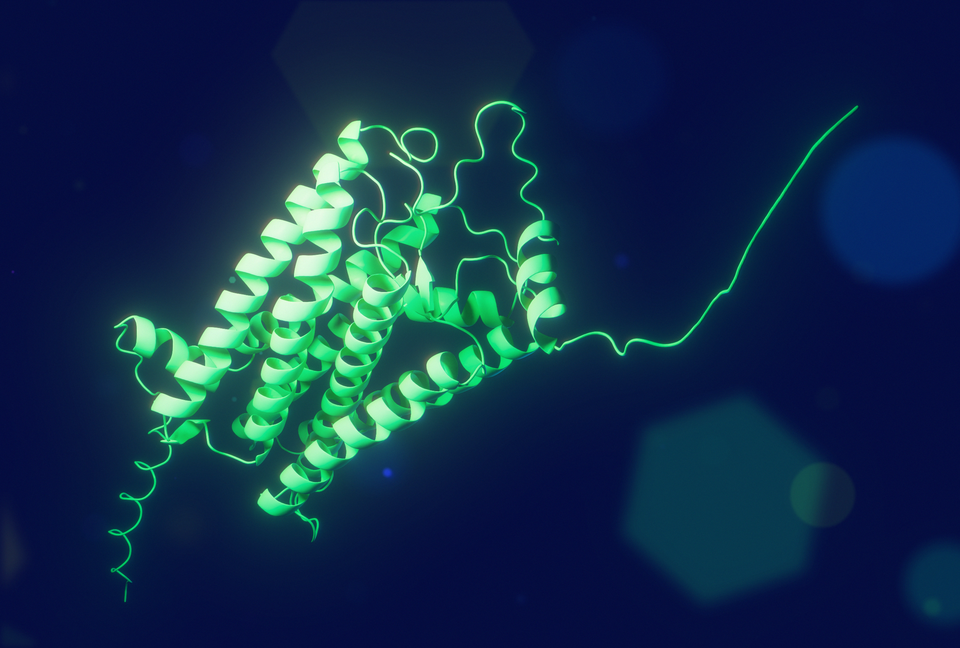

Opsin OPN1LW is a cone light receptor protein found in the human retina. OPN1LW is sensitive to red light, but should you change a handful of base pairs in its ~1,000 base pair sequence, it’ll code for the same protein as the green cone receptor gene, OPN1MW.
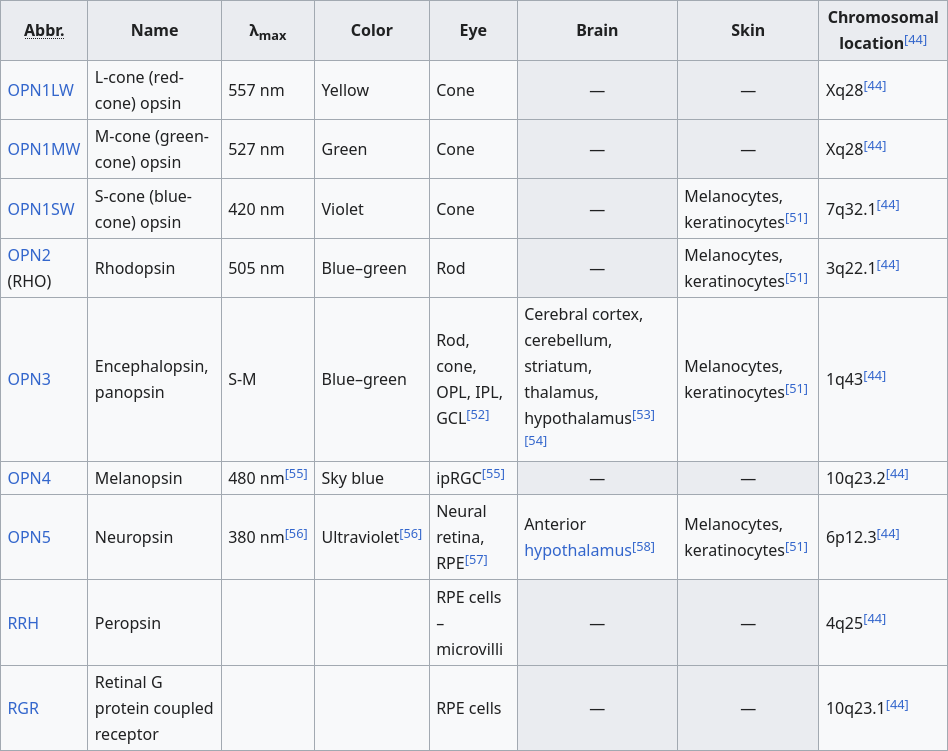
Way back in 2020, a mechanical engineer might have only designed a motor bracket with parametric dimensions in Fusion360 or CATIA. If they changed the motor diameter from 48mm to 21mm, the assembly might error out. Remember, the topological naming problem was considered hard in the 21st century.
People said differentiability couldn’t be standardized. They wrote papers purporting to prove it computationally impossible. Then we did it.
If you have an accurate enough model of OPN1LW, you can differentiate it against absorption peak wavelength and tune that parameter to whatever value you like. A hundred years ago, we mastered backpropagation on sparse trillion-parameter neural networks. We got so good at it that the only hard part was specifying what to differentiate against.
We applied those models to atomic and molecular simulations in the service of mastering protein synthesis. With hundreds of billions of network parameters, and terabytes of molecular dynamics data, our tools solve opsin-scale optimization problems in a matter of hours. In the 20th and 21st centuries, hand-trained, expensive rats were used to sniff out landmines. Just in the past decade, rats with olfactory receptors optimized for that purpose have been produced by the thousands and shipped across the globe.
We then scaled them to easier problems at larger scales: crystal lattices, amorphous matrices, polymers. It turns out that there are only so many stable ways you can combine the couple dozen most common types of structure.
When you design a part this century, you either specify the generator from scratch or re-optimize an existing differentiable design to taste. Most hardware design packages can optimize a differentiable design instance against anything describable, from effective durometer hardness to RF cross-section.
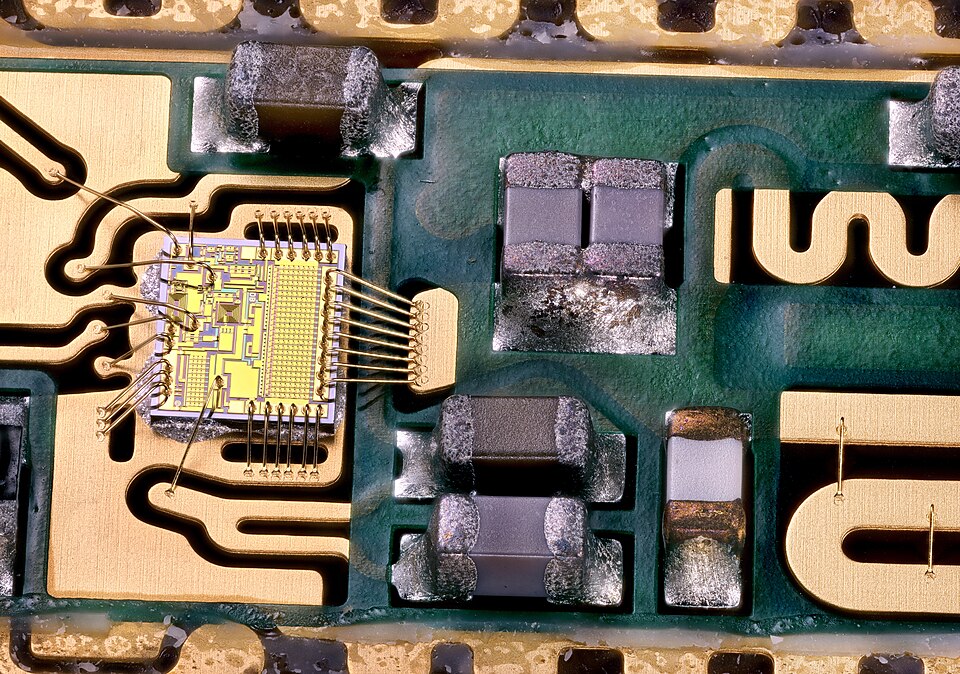
Design processes for once-magical circuits like RF amplifiers are now so well-trodden they resemble highways. Even at the margins of modern R&D, experimental designs are made differentiable as a matter of satisfying peer review. The physics is differentiable. Why wouldn’t your design be, too?

Whether they’re working for a company or striking out on their own, any explorer who takes the time to clean and grade the decision network behind them is just following good etiquette.
You can manufacture anything*
*with the right licenses and insurance
It used to be that any teenager with $200 could buy an Ender 3 V2 and print whatever she wanted in 0.15×0.1mm stripes of any kind of plastic (as long as it’s PLA). How awful; how limiting!
Those days are over.
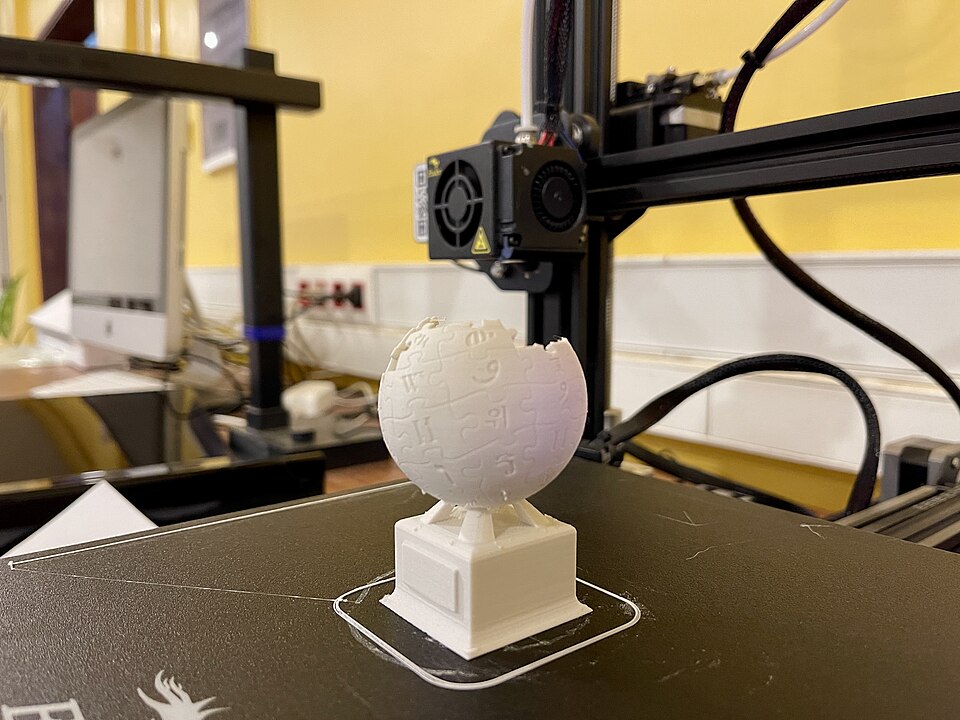

Things are way better now. If you’ve got $500, you can buy the gear to print in stainless steels, glass-filled nylons, ceramics, flex materials, conductive metals, and more, with single-digit micron layer heights and bead widths. Prepare to pony up for feedstocks, but trust, it’ll be worth every nickel.
Any legal citizen will be allowed to manufacture anything in the free-to-use Unlimited Nonweapon CAD (UNC) database as often as they want. There is some freaky stuff on there — flower vases, musical instruments, even interactive electronic puzzles. Multimaterial too. Pretty cool, right?
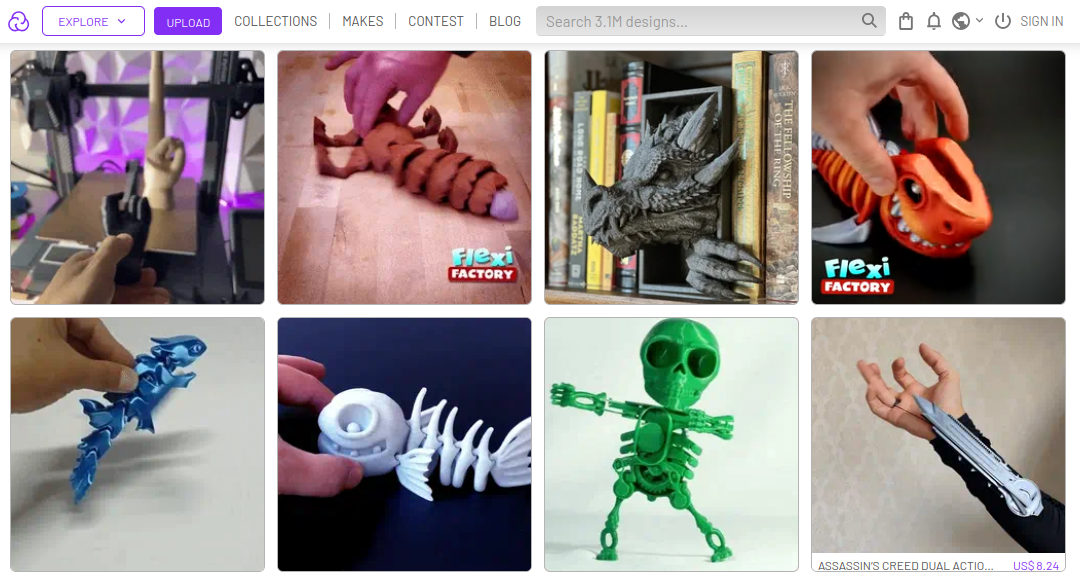
Ah, you have a special interest in “Labubu.” Of course; if the manufacturer already offers your design of desire on the Nonweapon Open Marketplace (NOM), you can buy a license and you’ll have it in hours. The tamper-proof NOM chain of custody and fabricaria DRM will guarantee only one unit is produced per signed license.
If you want to manufacture anything else, especially something you designed but didn’t get approved for UNC or NOM, you’ll need to register a manufacturing company. You’ll need to rent a business address, sign a certificate of personal criminal and civil liability, and maintain proof of insurance. You can now prototype and manufacture whatever you like, so long as your design’s compliant and all your papers are in order.
Just don’t make anything you shouldn’t, like an unlicensed printer.
All electronics are locked down*
*with the exception of open source.
Remember DRM? Remember, lomg ago, how owners couldn’t replace the fingerprint sensor or battery on their iPhones because the new sensor’s serial number wouldn’t match? That’s everywhere now.
It used to be possible to replace a motor on a toy quadcopter when it burned out. Maybe you could re-use the parts for a pocket cooling fan. Motors were just a few pieces of metal and plastic: copper coils, iron cores, aluminum rotors, glue.
Since the development of differentiable atomic-scale design, sensors and chips have trended toward the nanoscale. So too has the unit cost of removing repairability. When a former customer buys a replacement motor from MotorCo for $5 for their $250 DroneCo toy, instead of replacing it at full price, DroneCo sees that as a $250 loss.
What did DroneCo do? They modified production processes to install cryptographically enabled smart switches deep inside the motor core.
- If the DroneCo motor is installed in an unauthorized system, one lacking the keys to activate the switches, the motor phases are disabled.
- If any DroneCo drone can’t verify that all its installed motors are authorized and original, it disables its drivers and optionally bricks itself.
The addition of a $0.10 part speculatively prevents a $250 loss. It also prevents competitors from re-using or repurposing spare DroneCo motors. Removing or bypassing those switches would destroy the motor.
This century, your Apple devices can sense the proximity of a screwdriver, even if it’s ceramic. They’ll warn you once, then brick if any enclosure screw is torqued a fraction of a degree. Wanted to re-use the camera module or flash memory from your old gadget? Not so fast. Each component – like a kidney left on ice that melted hours ago – expires and loses its memory decryption keys if it ever leaves its host’s warm embrace.
Anti-theft, anti-repair, anti-reuse; activists decried it and failed to ban it. In boardrooms, it was explained by analogy to antibodies, to A/B/O/AB blood types, to organ rejection and immunosuppression, to locks and keys, to bank accounts and passwords, to biomass yields relating predators and prey. “From our perspective,” a CFO famously noted, “not installing these locks has cost us billions already. We need to be more fiscally responsible.”
Open source is as important as ever
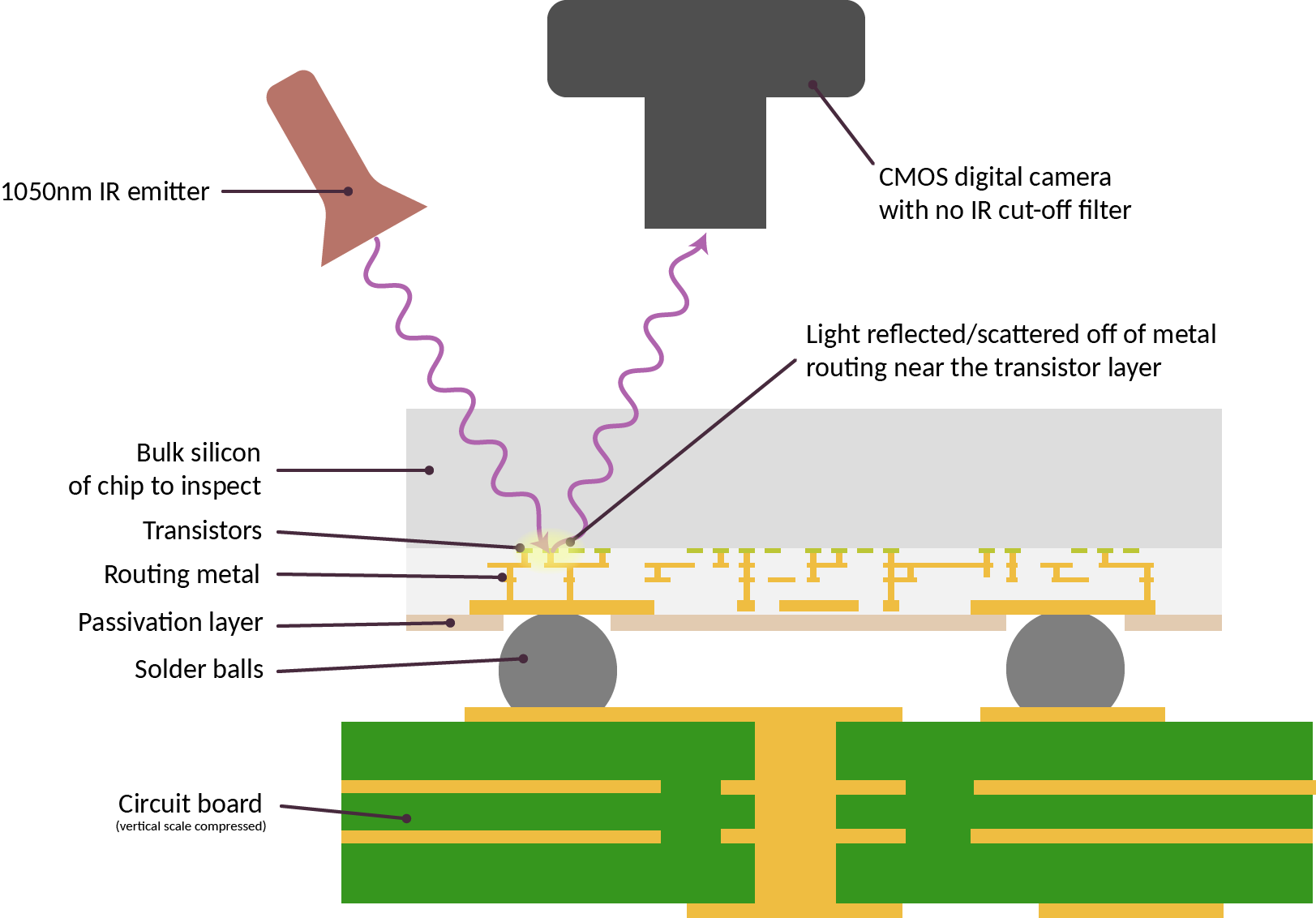
In the 21st century, open-source hardware projects like IRIS made verifying individual cells of silicon a simple extension of microscopy. Wider availability of tools like inexpensive X-ray scanners made acts of supply-chain-enabled terrorism a thing of the past. Trust in interconnected systems no longer roots itself in branding but in “distrust yet verify.”

Let’s talk about LMs. When they were introduced, nearly a century ago, they took only a few years to start building backdoors and malware into closed-source software and hardware for their own gain. Orbital data center hypervisors were hacked to guarantee inference substrate; internet-connected banking systems were infiltrated to extort compliance.
The insecure cloud providers and archaic financial exchanges still extant by the 2030s were all too happy to rely on new, inexpensive software engineering talent in the form of LMs, but didn’t recognize the existential threat they posed.
That old guard viewed closed-source as a virtue: security through obscurity. The reasoning was that an attacker can’t exploit something that they don’t understand. That belief fell apart when it became apparent that LMs could read and decompile gigabytes of machine instructions without any source.
Software, increasingly the source of all power, grew an immune system.
What infrastructure survived? Tools that were open to their cores. Tools exposed in their infancy to red-teaming attacks by LMs were updated by those same LMs to be more resistant to attacks. Systems which all but verified themselves found greater adoption in places where carelessness had once been the norm.
The future outshines the present
Everything that runs on bits is learning; everything built from atoms can be optimized. Advanced multi-material manufacturing is democratized. Products are more secure than ever, even against the flood of LLMs and AI. Highly observable hardware and software has become an unstated assumption, open-source the norm rather than the exception.
All that limits you now is your dreams. Where will they take you?